
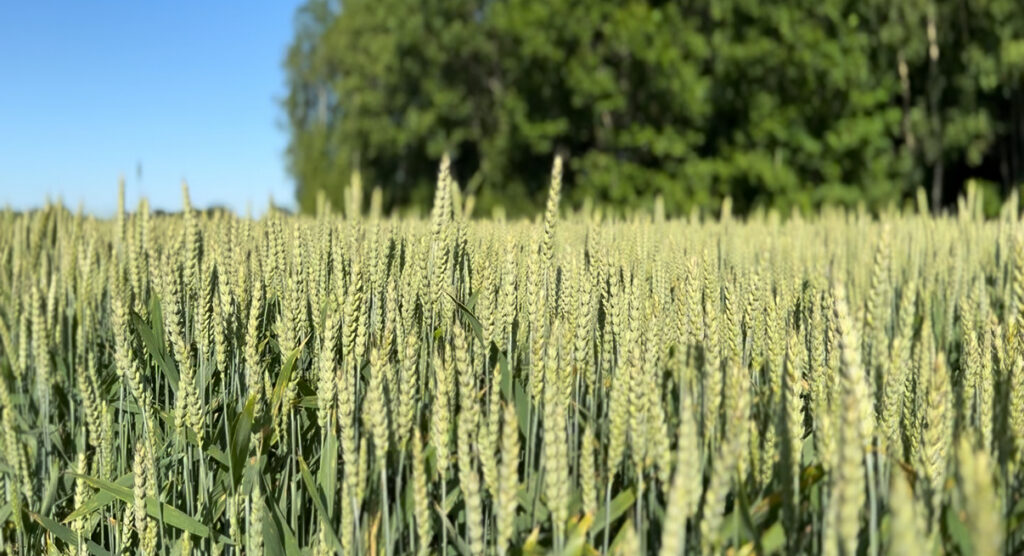
The growing conditions of 2025 had a significant impact on the grain–straw ratio in winter wheat. On many fields, strong vegetative growth simply didn’t translate into grain yield. Large volumes of straw combined with low grain output point to a systemic imbalance caused by excessive moisture, poor potassium availability, and nitrogen rates that were too high relative to the overall nutrient balance.
How Does Waterlogging Affect the Root System?
When soil remains saturated for long periods, plants start suffering from oxygen deficiency. Root hairs die back, nutrient uptake slows, and the products of photosynthesis fail to reach the parts of the plant where they’re needed most.
Nitrate nitrogen, however, is extremely mobile in water. Because of this, plants take up large amounts of it very quickly. The result? Lush leaf growth and heavy straw by harvest time.
But at the same time, the uptake of potassium, phosphorus, and magnesium drops dramatically – and these nutrients are critical for grain formation.
How Potassium Deficiency Reduces Winter Wheat Grain Yield
Potassium (K) is responsible for transporting sugars into the grain. When potassium is limited:
- photosynthesis produces fewer carbohydrates
- the sugars that are produced don’t move efficiently into the ears
- grains remain small and poorly filled
This leads to crops with plenty of straw but disappointingly low grain yields.
Stress During Flowering Reduces the Number of Grains
Flowering (anthesis) is the most sensitive growth stage for wheat. Waterlogging and lack of sunlight during this critical period:
- reduce pollen viability
- cause fertilisation problems
- result in fewer grains forming per ear
The crop may look green and vigorous, but the ears contain fewer well-filled grains.
Where Did All the Nitrogen Go?
Paul-Tech’s soil data showed that this season the nitrogen applied to fields was taken up by plants almost completely – even when rates were high. Yet this uptake did not translate into grain yield.
Instead, nitrogen was used for:
- building leaf and stem biomass (extended vegetative growth)
- compensating for stress
- increased respiration
When comparing yields to the nitrogen applied, only around half – sometimes even less – ended up in the grain. This clearly shows that nitrogen use efficiency was low.
What Can We Learn From This?
The “lots of straw – low grain yield” situation arose from the combination of three factors:
- Excess moisture, which restricted root function
- Limited potassium availability, preventing proper grain filling
- An imbalanced ratio of nitrogen to other essential nutrients
To avoid similar issues in the future, it’s crucial to balance nutrient supply – with particular attention to potassium. Improving drainage and soil moisture management also plays an important role. In a wet year, the downsides of nitrogen-focused fertilisation become especially apparent.
This imbalance isn’t an accident; it’s a clear signal that the crop’s nutrition strategy needs adjusting.
When deciding nitrogen rates, it’s worth considering both nutrient balance and weather conditions, which greatly influence nutrient uptake. Increasing or reducing nitrogen according to the season’s conditions – and ensuring sufficient potassium – helps optimise nutrient efficiency.