
Monitoring weather conditions has always been important in agriculture. Temperature, rainfall and wind influence both the timing of field operations and crop development, which is why weather stations have been used by farmers for many years.
At the same time, technological progress has introduced new possibilities. Increasingly, solutions are being used that collect data not only from the air but also from the soil. This raises an important question: what exactly do these different stations measure, and how can the data be used in the field?
What Does a Traditional Weather Station Measure?
A traditional weather station is primarily designed to monitor atmospheric conditions. It is typically installed in an open area at a standard height of around two metres above ground level, with the aim of providing an objective overview of surrounding weather conditions.
A weather station commonly measures:
- Air temperature
- Relative humidity
- Wind speed and direction
- Rainfall
These data points support day-to-day decision-making, such as timing spraying, fertiliser applications or harvesting. They also provide a useful overall picture of the conditions affecting a particular area.
What Doesn’t a Weather Station Always Show?
While weather station data are valuable, they do not always reflect what is happening close to the crop itself. Plants grow in soil, and their development largely depends on processes taking place within the root zone.
For example, during summer night frosts, the temperature at two metres above ground may remain above zero, while temperatures at crop height fall below freezing. In such cases, a weather station may not indicate frost risk, even though the crop is affected.
A similar situation can occur with soil moisture or soil temperature, where air-based measurements do not provide a complete picture of the soil’s actual condition.
What Is a Soil Station and What Does It Measure?
A soil station is designed to collect data directly from the soil and the crop’s growing environment. Its focus is not general weather conditions, but the state of the soil and the changes taking place within it.
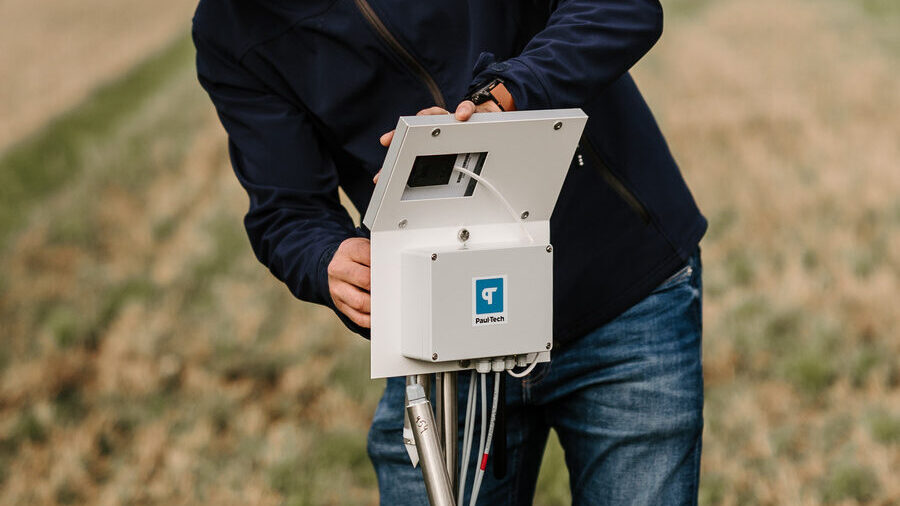
A Paul-Tech soil station is installed directly in the field, within the crop canopy and at crop height. It measures:
- Soil moisture
- Soil temperature
- Nutrient dynamics within the soil
- Air temperature close to ground level
In addition, the system displays field-specific weather data, including air temperature, rainfall and wind. The key difference lies in the location of the measurements — they are directly linked to the specific field and the crop’s actual growing conditions.
A Practical Perspective: Why Measurement Location Matters
The location of measurement significantly influences the type of information the data provide. While a weather station offers insight into atmospheric conditions at a standard height, a soil station helps to better understand the conditions in which crops are actually growing.
This can be particularly relevant for:
- Assessing water movement within the soil
- Monitoring soil warming and cooling
- Understanding changes in nutrient availability
- Identifying early signs of plant stress
Such information does not replace weather data, but rather complements it with an additional layer of insight.
How Can These Data Be Used in Practice?
Weather and soil data are often most useful when considered together. A weather station helps assess current and incoming conditions, while soil data reveal how those conditions are expressed within the field.
For example:
- After rainfall, it is possible to assess whether water has reached the root zone
- During temperature fluctuations, soil response can be monitored
- Following fertiliser application, nutrient movement in the soil can be observed
This combined approach supports more informed and better-timed decisions.
Conclusion
Weather stations and soil stations serve different purposes. A weather station provides valuable information about atmospheric conditions, while a soil station helps to better understand interactions between soil and crop.
The most suitable solution depends on the farmer’s objectives and the type of information required for specific decisions. The more closely decisions are linked to soil condition and crop response, the more important soil data become.