
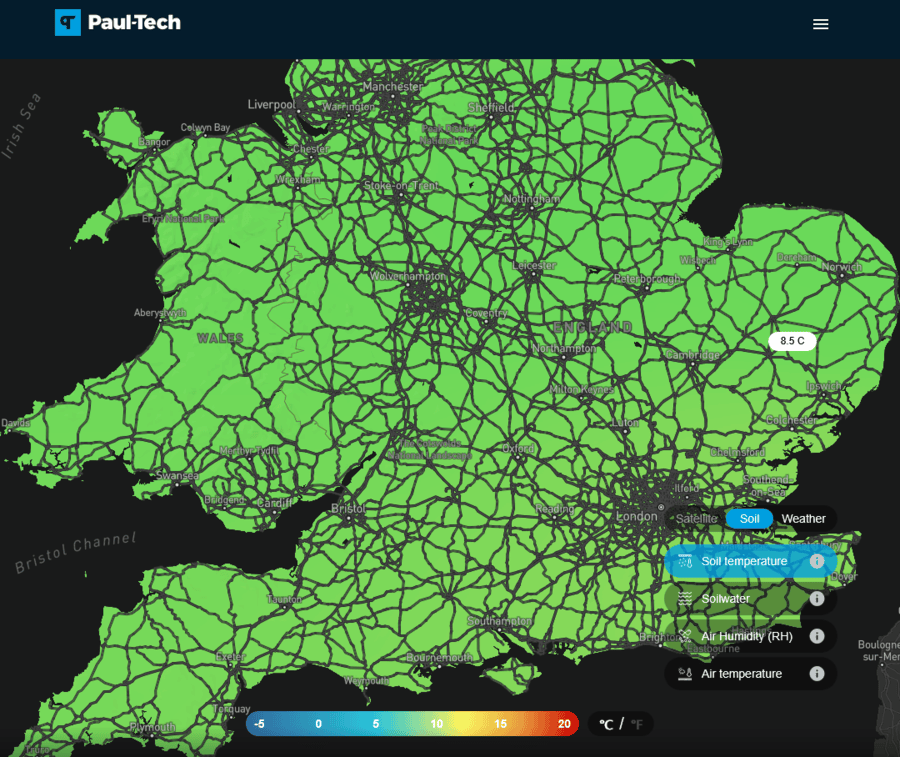
Soil temperature is a key factor that links soil biological activity and plant growth into one interconnected system. It directly affects microbial activity in the soil, seed germination, root development and nutrient uptake. Although field decisions are often made based on air temperature or the calendar, these do not always reflect what is actually happening in the soil. That is why measuring and consistently monitoring soil temperature is important throughout the year – not only during the growing season.
How Does Soil Temperature Affect Microbial Activity and Plant Growth?
Plant growth begins in the soil, and soil temperature determines how actively roots and soil microorganisms function. When the soil is too cold, microbial activity slows down, seed germination is delayed and roots are unable to absorb water and nutrients efficiently. As a result, fertiliser applications may not deliver the expected benefits.
In practice, the following guidelines are commonly used:
▪️ microbial activity in the soil begins at approximately 5–8°C;
▪️ most crops start active growth once soil temperature reaches around 10–12°C;
▪️ the most favourable range for plant growth and soil biological activity is 15–25°C;
▪️ very high temperatures above 30°C can accelerate soil drying and increase stress on both soil and plants.
These values help assess whether conditions are supportive of plant development, although the actual response always depends on soil type and the crop being grown.
Why Doesn’t Air Temperature Always Tell the Full Story?
A common question is whether monitoring air temperature alone is sufficient. The issue is that air and soil warm up and cool down at different rates. In spring, air temperatures may remain warm for several days while the soil is still cold. In autumn, the opposite often happens – air temperatures drop quickly, but the soil retains heat for much longer.
This means that decisions that seem logical based on air temperature alone may not align with the actual condition of the soil. Soil temperature provides a much more accurate basis for timing drilling, fertiliser applications and other field operations.
How Does Paul-Tech’s Real-Time Soil Temperature Map Help?
Paul-Tech soil stations measure temperature directly in the soil, within the crop’s growing environment, and compile this information into a real-time soil temperature map. The map provides an overview of current conditions as well as how soil temperature changes over time.
The temperature map helps to:
- identify regional differences in soil warming and cooling;
- track when stable warming or cooling trends develop;
- understand how soil responds to weather fluctuations.
The timeline adds context, allowing users to view not just a single moment, but the full process over time.
What Does Soil Temperature Tell Us About Winter Soil Conditions?
The value of soil temperature monitoring is not limited to the growing season. In winter, it provides important insights into soil freezing and thawing dynamics and helps to understand the conditions in which crops overwinter.
Paul-Tech measurements show that due to high soil moisture content, soil often acts as a temperature buffer around the freezing point. This means that even during prolonged cold periods, soil temperature at depths of 8 and 20 cm typically remains close to 0°C. When snow cover is present, the soil often stays unfrozen, with temperatures remaining between 0 and 1°C.
However, frequent freeze–thaw cycles, especially in surface layers, can cause frost heave, which may mechanically damage plant roots. Monitoring soil temperature helps assess these risks and better understand winter impacts on the soil.
How Does Soil Temperature Support Spring Decisions?
In spring, timing is critical. Soil temperature data helps determine when the soil is warm enough for drilling or fertiliser applications, and which fields become workable earlier than others.
Combining real-time and historical data allows farmers to:
- start the season based on evidence rather than assumptions;
- avoid operations that are too early or unsuitable;
- plan fieldwork according to the actual condition of the soil.
Why Is Continuous Soil Temperature Monitoring Valuable?
Soil temperature is not just a single number in a data table – it is an essential indicator that helps explain how soil behaves under different conditions. When combined with other soil parameters and historical data, it provides insight into when conditions support plant growth and when risks may arise that affect yield potential and the timing of field operations.
Paul-Tech’s solution brings these data into one system and makes soil processes visible and understandable. It gives farmers a more reliable foundation for everyday decision-making, reduces reliance on assumptions, and supports field management throughout the year – from assessing winter risks to planning spring and summer operations.