

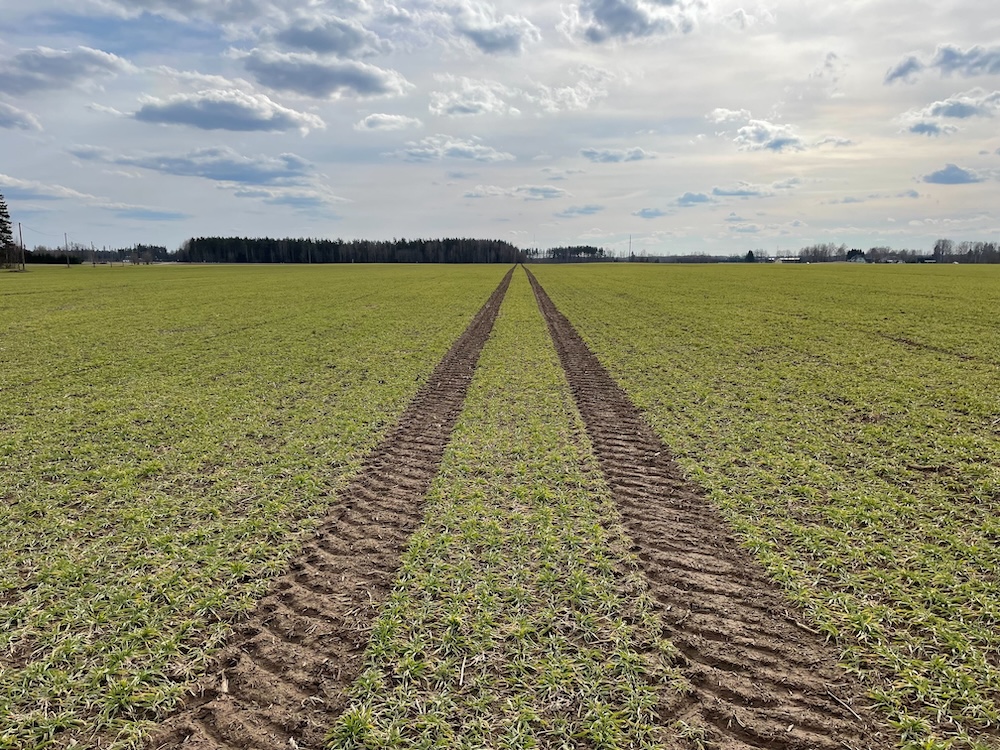
Spring nitrogen application is one of the most important decisions you’ll make when it comes to protecting yield potential. Beyond the question of timing, it’s just as important to understand how quickly nitrogen actually reaches the plant — and what influences that.
When to apply?
Nitrogen is best applied once the soil is no longer frozen or waterlogged and the ground conditions are fit for travel. There’s no benefit to going out too early on frozen or thawing ground — meltwater and surface runoff can easily carry nitrate nitrogen off the field before it ever reaches the roots.
Keep an eye on the forecast, too. You’ll get the best response when application is followed by a moderate spell of rain — at least 5–10 mm — enough to dissolve the fertiliser and wash it into the rooting zone. Without rain, the product sits on the surface and the response is delayed.
How quickly does nitrogen become available?
With ammonium nitrate (AN), part of the nitrogen is already in nitrate form (NO₃⁻), which becomes plant-available very quickly — typically within hours to a day after rainfall. The ammonium fraction (NH₄⁺) needs to be converted in the soil first, so it becomes available more gradually.
Rough timeline for ammonium conversion (nitrification), depending on soil temperature:
- Around +5 °C — very slow, 2–4 weeks or longer
- Around +10 °C — moderate, 1–2 weeks
- +15–20 °C — rapid, a few days to roughly a week
Soil temperature also has a direct effect on crop uptake:
- At around +5 °C, nitrogen may already be present in the soil solution, but crop roots are barely active
- From +10 °C onwards, the crop starts taking up nitrogen much more efficiently
What affects nitrogen availability?
Getting nitrogen from the bag to the plant depends on more than just application timing. Several factors come into play:
- Soil moisture — the fertiliser must dissolve and move down with soil water into the rooting zone
- Soil structure — compacted soils restrict oxygen supply and slow nutrient movement
- Temperature — drives both crop growth and microbial activity in the soil
- Aeration — poor aeration encourages nitrogen losses through denitrification
Biggest risks to watch for
- Waterlogging and saturated soils — lead to runoff and denitrification losses
- Compaction — promotes gaseous nitrogen losses
- Dry weather after application — fertiliser doesn’t dissolve and stays stranded on the surface
In short
The best time to apply nitrogen is when the ground is fit, soils aren’t waterlogged, the crop is starting to move, and there’s rain in the forecast. Under those conditions, the nitrate fraction gets to work quickly, while the ammonium portion converts steadily over the following days and weeks to keep supply going.
Get the timing right, and your nitrogen works for the crop — not against your pocket.