
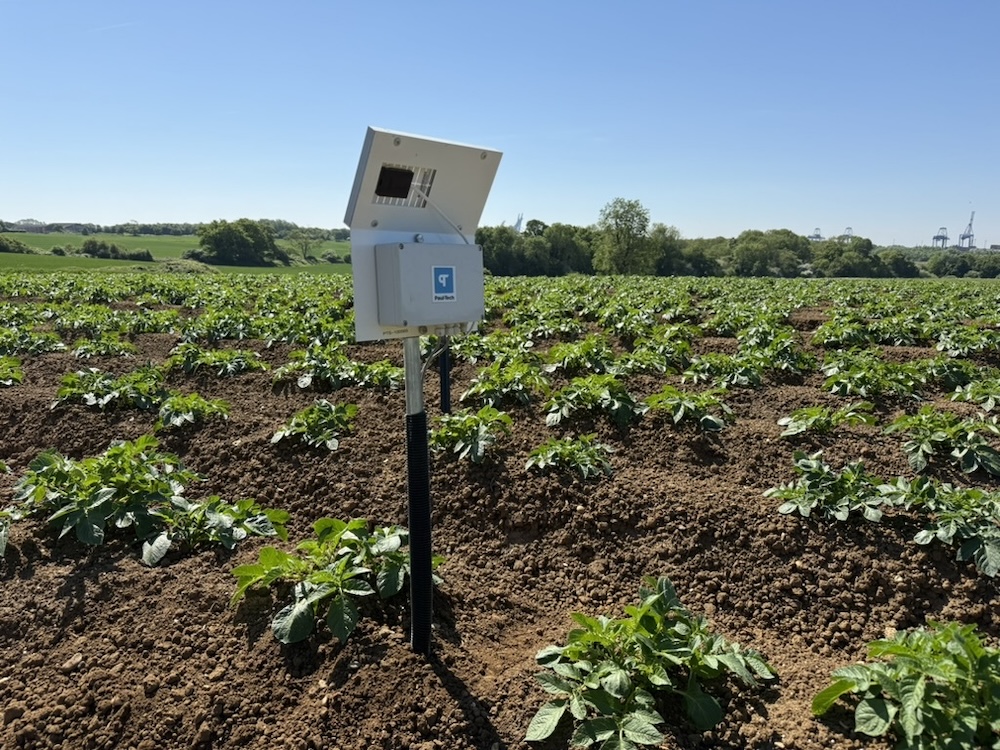
What is the story behind Branston Potatoes and soil data?
A UK potato producer finds that real-time soil monitoring reveals a hidden opportunity: the data suggests meaningful nitrogen reductions may be possible — and that the next step is finding out how far they can go.
Branston Potatoes is one of the UK’s most recognised potato producers — and a company with sustainability at the heart of its operations. Together with retail partner Tesco, Branston hosts a Low Carbon Concept Farm in Lincolnshire: a first-of-its-kind initiative established to help farmers and suppliers reach net zero targets through innovative growing techniques. The partnership has already delivered meaningful results — the farm’s first commercial crop of Georgina potatoes reached Tesco shelves in early 2026, produced with more than 50% lower carbon emissions than conventional production.
That same commitment to reducing on-farm emissions led Branston to work with Paul-Tech, deploying our soil monitoring devices across their potato fields to track nitrogen and moisture dynamics throughout the growing season.
The data they collected told a clear and valuable story.
What did the season’s soil monitoring show?
By monitoring nitrate levels continuously across the season, the Paul-Tech devices captured something that is difficult to see any other way: a significant amount of residual nitrogen remaining in the soil at the end of the growing season.
This is not an uncommon finding — but without real-time soil data, it is almost impossible to quantify. Farmers typically apply nitrogen based on historical averages and general crop requirements. The result can be over-application that sits unused in the soil, representing both a financial cost and an environmental one.
For Branston, the data made the opportunity concrete and measurable.
How is Branston changing its nitrogen strategy?
A new strategy takes shape.
The insight from the season’s monitoring opened up a more precise way of thinking about nitrogen management. Rather than applying a heavy base dressing at the start of the season based on historical averages, the data points to a smarter approach:
- Apply a base dressing informed by what the soil data actually shows — not just what convention suggests.
- Monitor nitrate levels in real time throughout the season.
- Top up with targeted applications only when the data shows nitrate levels beginning to decline — rather than applying on a fixed schedule.
This shifts nitrogen management from calendar-based assumptions to evidence-based decisions. And crucially, the residual nitrogen visible in last season’s data suggests there is real headroom to start reducing base dressing inputs — without putting yield at risk.
What will the next trial test?
The next step: putting the insight to the test.
The discussions that followed the season’s data have led to a clear and exciting next step. Branston and Paul-Tech are planning a small-scale trial to explore just how much the base nitrogen dressing can be reduced — while continuously monitoring how the crop responds, and protecting yield throughout.
The trial will combine real-time soil data with careful observation of crop development and final yield results. The goal is not to cut nitrogen arbitrarily, but to let the data show what is actually needed — and build the evidence base to make confident adjustments going forward.
For Branston, this is a natural fit with the Low Carbon Concept Farm they run in partnership with Tesco. Nitrogen production and application is one of the most significant sources of on-farm emissions. If the data can support even a meaningful reduction in base inputs — topped up precisely when and where it is needed — that is a genuine contribution to the net zero ambition that sits at the heart of the Tesco-Branston partnership.
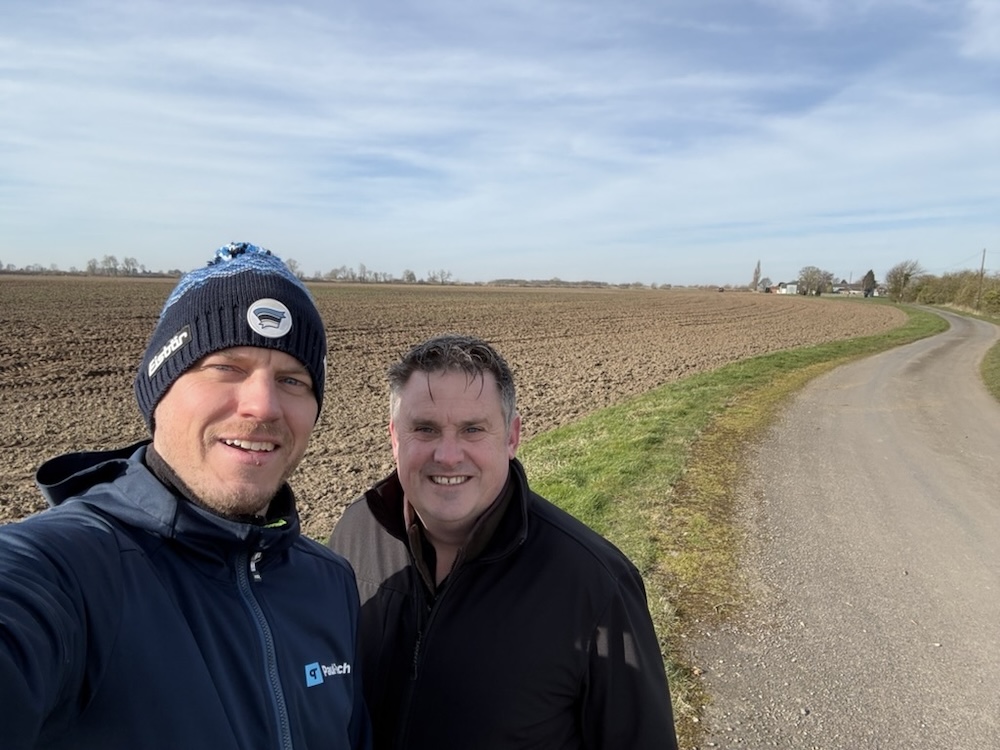
Andrew Blair, Field Technical Manager, Branston Potatoes:
“The data gave us a new way of looking at our nitrogen programme. We could see what was actually happening in the soil, not just what we assumed. That changes how you plan.”
Why does this matter beyond one farm?
Nitrogen over-application is one of the most significant and widespread inefficiencies in arable farming. It contributes to greenhouse gas emissions, leaching into waterways, and unnecessary input costs. Yet for most growers, reducing nitrogen feels like a risk — because without data, there is no safety net.
Real-time soil monitoring changes that equation. When you can see nitrate levels moving in real time, a reduced base dressing is not a gamble. Instead, it is a managed decision. This decision is backed by evidence you can act on.
Branston’s trial represents exactly the kind of careful, data-driven work that the Low Carbon Concept Farm was designed to enable — testing new approaches rigorously, so that the findings can be rolled out with confidence across Branston’s wider grower base and, ultimately, Tesco’s broader supply chain.
What comes next?
The Paul-Tech devices will be deployed at the trial site from the start of the season. Data will be monitored throughout. This will inform any top-up decisions in real time. It will also help the team understand exactly where the opportunities lie. At harvest, yield and quality results will be compared to assess the full picture.
We are looking forward to seeing what the data reveals — and to sharing the results as another step in understanding how far precision soil monitoring can take sustainable potato production.
Read also: No More Guesswork: Monitor Nitrate Nitrogen in Real-Time